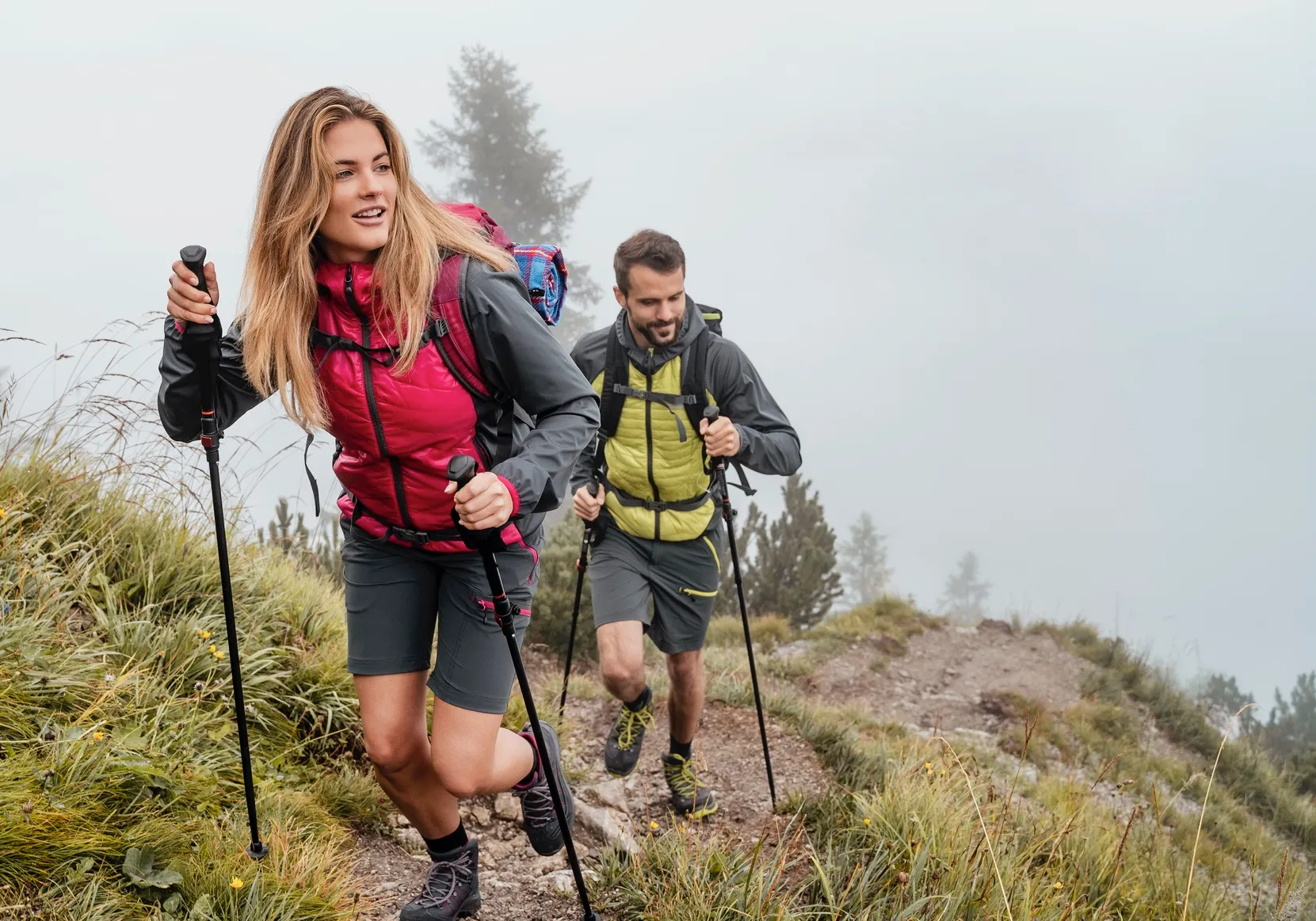

Dressing for winter in the mountains: frost is not the main problem

The most repeated scene on a winter hike: someone steps out of the car in a thick jacket, is sweating twenty minutes later, and starts to freeze the moment they stop. The problem is not a shortage of clothing — it is a failure to manage it.
The core principle: stay dry
Your body produces the heat; the clothing only keeps it. But moisture destroys that system: wet fabric carries heat away tens of times faster than dry fabric. So the number one rule in winter is not to protect yourself from frost but to avoid sweating.
The practical consequence: dress so that you are slightly cold when you set off. After the first ten minutes your body will warm itself. Someone who starts warm has to strip off half an hour later.
The layer system
1. Base layer (moisture management). A thin layer next to the skin that moves sweat away. Material: synthetic or merino wool. Cotton is forbidden — it absorbs moisture, holds it, and chills you directly.
2. Mid layer (insulation). Fleece, a light down jacket or a synthetic-fill vest. This layer's job is to trap air — warmth comes from the trapped air, not the fabric.
3. Outer layer (protection). A windproof, waterproof shell. A breathable membrane (Gore-Tex and equivalents) lets sweat vapour escape.
An important detail: take the mid layer off while moving and put it on the moment you stop. The first action at a rest stop is putting on a warm layer, not drinking water.
Extremities
When the body cools it pulls blood towards the core, so hands and feet are the first to go.
- Feet: wool socks (one thick pair; two thin pairs often compress the foot and reduce circulation). Boots must not be tight — a toe that can move is a warm toe.
- Hands: a spare pair in addition to your gloves. Wet gloves are worse than no gloves.
- Head: a large share of heat loss goes through the head; a hat and a neck gaiter (buff) are the lightest and most effective items you can carry.
Other winter specifics
- Goggles or sunglasses. Snow reflects sunlight; several hours on a snowy slope without eye protection can seriously burn your eyes.
- A thermos. You will not want to drink cold water, and dehydration follows. A hot drink doubles winter fluid intake.
- A spare dry set left in the car — changing clothes on the way back is how you avoid getting ill that night.
- The day is short. In December it is dark by 5pm. Keep a headlamp in the pack and plan the route around an early start.
- Gaiters stop snow filling your boots in deep snow — cheap and genuinely useful.
When to turn back
In winter the decision to turn back comes earlier than in summer. Three clear signals: shivering that does not stop, loss of sensation in hands or feet, and a group pace far below plan. If any one of them appears, the objective is no longer the summit — it is the car.
On which routes make sense in winter: Winter in the mountains. Avalanches are a separate subject: Avalanche safety.
Ready to experience it yourself? See the upcoming departures.
Browse tours