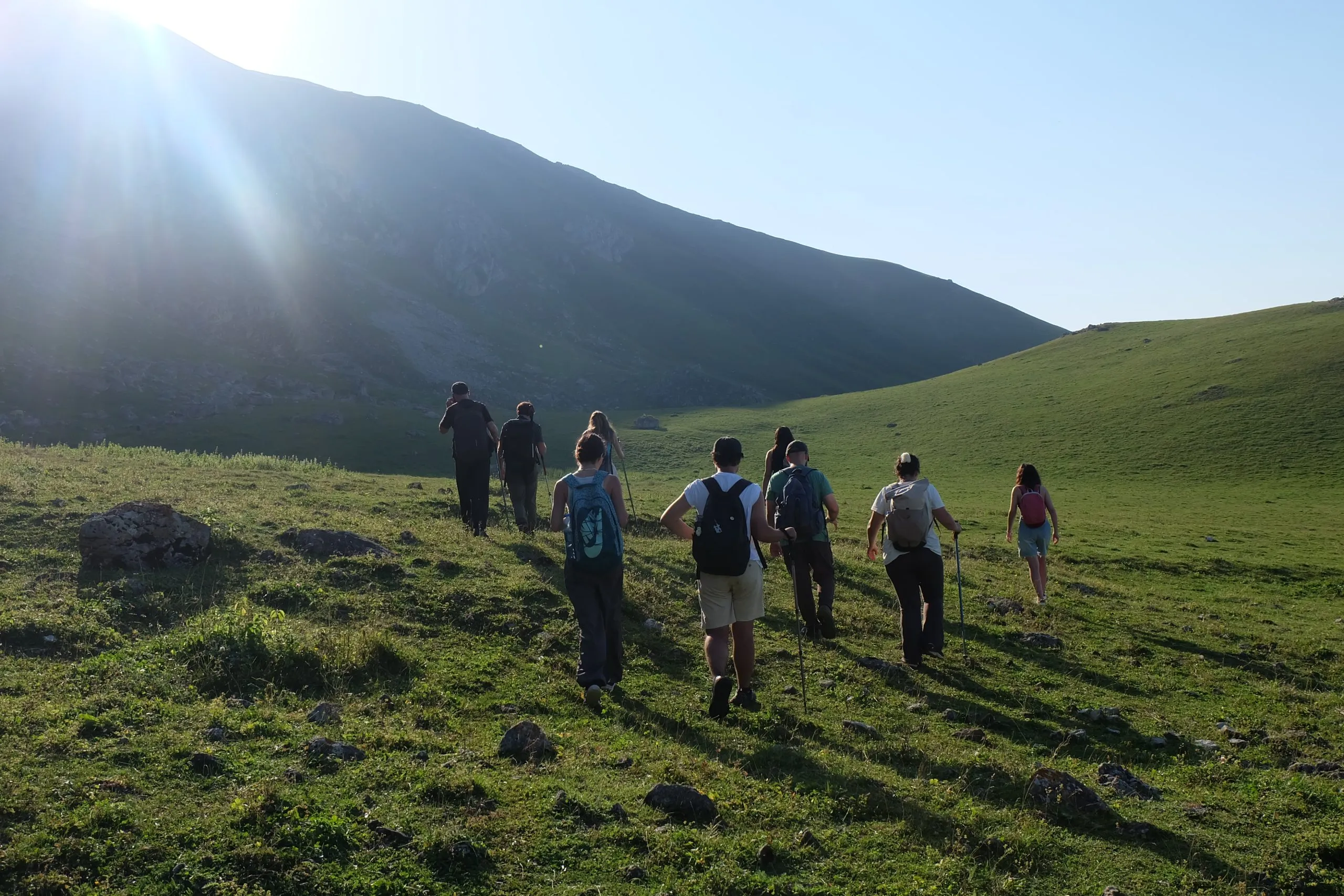

Trekking poles: do you need them, how to choose, how to use them
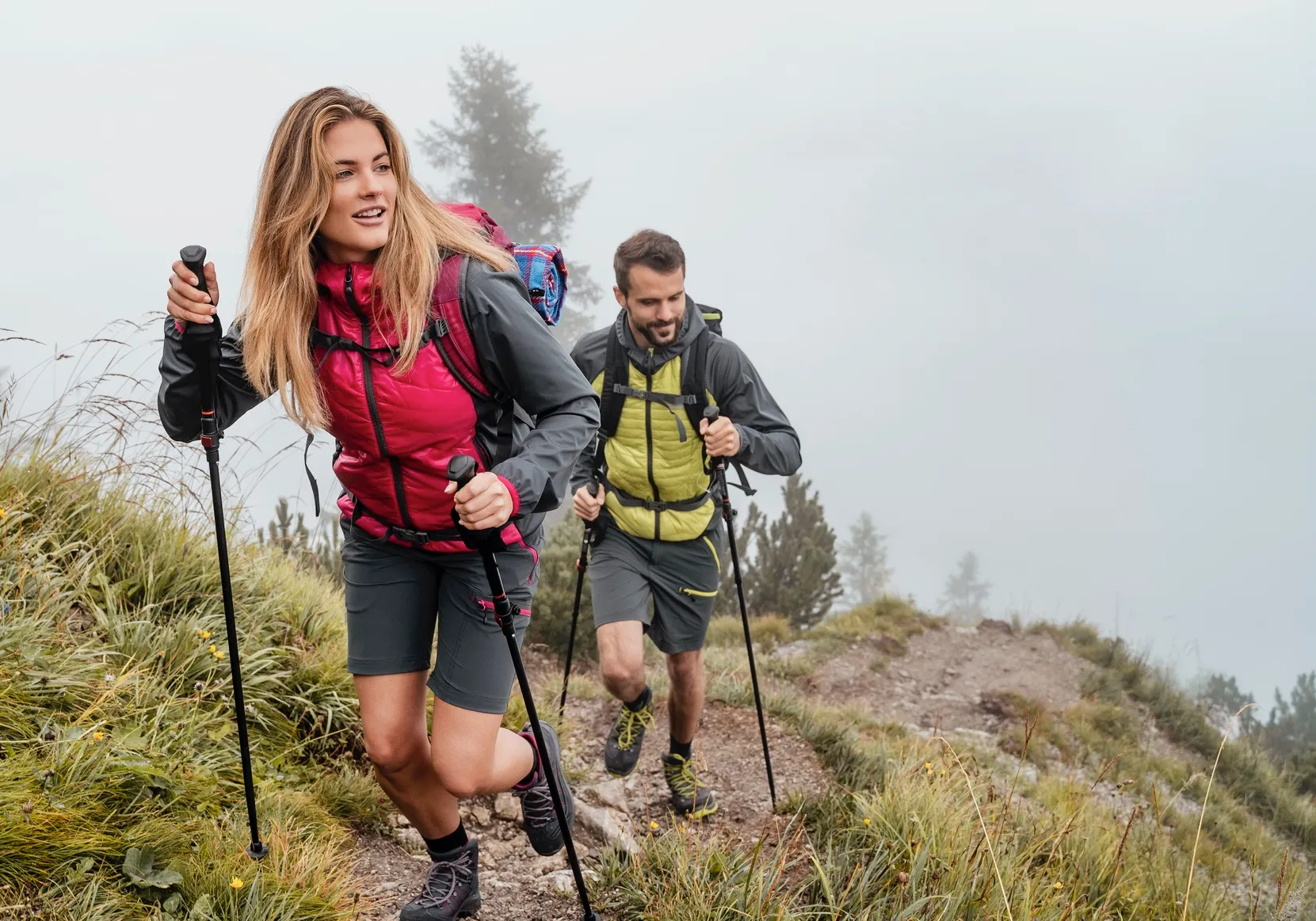
Trekking poles are often dismissed as "for older people". In practice they are one of the best value-for-money items in your pack.
What they give you
- They reduce load on the knee joint. On descent part of your weight transfers to your arms; measurements show the force on the knee drops noticeably — in some studies by around a quarter. On a long, steep descent the difference is obvious.
- They give balance. On rock, mud, river crossings and snow they mean two extra points of contact.
- They set a rhythm. On a long hike your stride becomes more even with poles, and you stop less often.
- Side uses: a tarp or tent pole, and a way to probe ahead in tall grass.
How to choose
Locking type. Two main options: twist-lock and lever (flick-lock). The lever type opens with gloves on in the cold and resists slipping better — the safer choice for a first pair.
Material. Aluminium is heavier but bends rather than snapping — good for hard use. Carbon is lighter but can fail suddenly under a side load. For ordinary hiking, aluminium is entirely sufficient.
Folding. Telescopic poles are cheap and sturdy; Z-fold poles pack smaller on a backpack.
Grip. Cork or EVA foam is more comfortable for sweaty hands. A long grip lets you slide your hand down on a steep slope without shortening the pole.
Tip and basket. A hard carbide tip bites into rock; a rubber cap is for asphalt and sensitive surfaces. A wide snow basket is essential in snow and useful in mud.
Length: the simple rule
With the tip on the ground, your elbow should be at 90 degrees. That is the baseline setting for flat ground.
- Going up shorten by 5–10 cm — the pole goes in front, for pushing.
- Going down lengthen by 5–10 cm — the pole goes ahead of you and works as a brake.
- Traversing a slope, keep the uphill pole short and the downhill pole long.
Technique
Dropping your hand into the strap from above is wrong. The correct way: bring your hand up through the strap from below and then grip. That way the load goes onto the strap rather than your wrist, and you do not have to clench your fingers.
The rhythm is simple: left foot – right pole, right foot – left pole. When tired, planting both poles together on a steep pitch and pushing your body up also works.
When not to use them
On short, smooth routes, in places where you need your hands on rock, and on a crowded trail, poles get in the way. Fold them and strap them to your pack on those sections — tips pointing down, not into the face of the person behind you.
Their benefit is clearest on routes with long descents: Qusar, Kuzun–Laza, Məstdərgah peak, Kəpəz peak.
Ready to experience it yourself? See the upcoming departures.
Browse tours