

No signal in the mountains: preparing for a dead zone
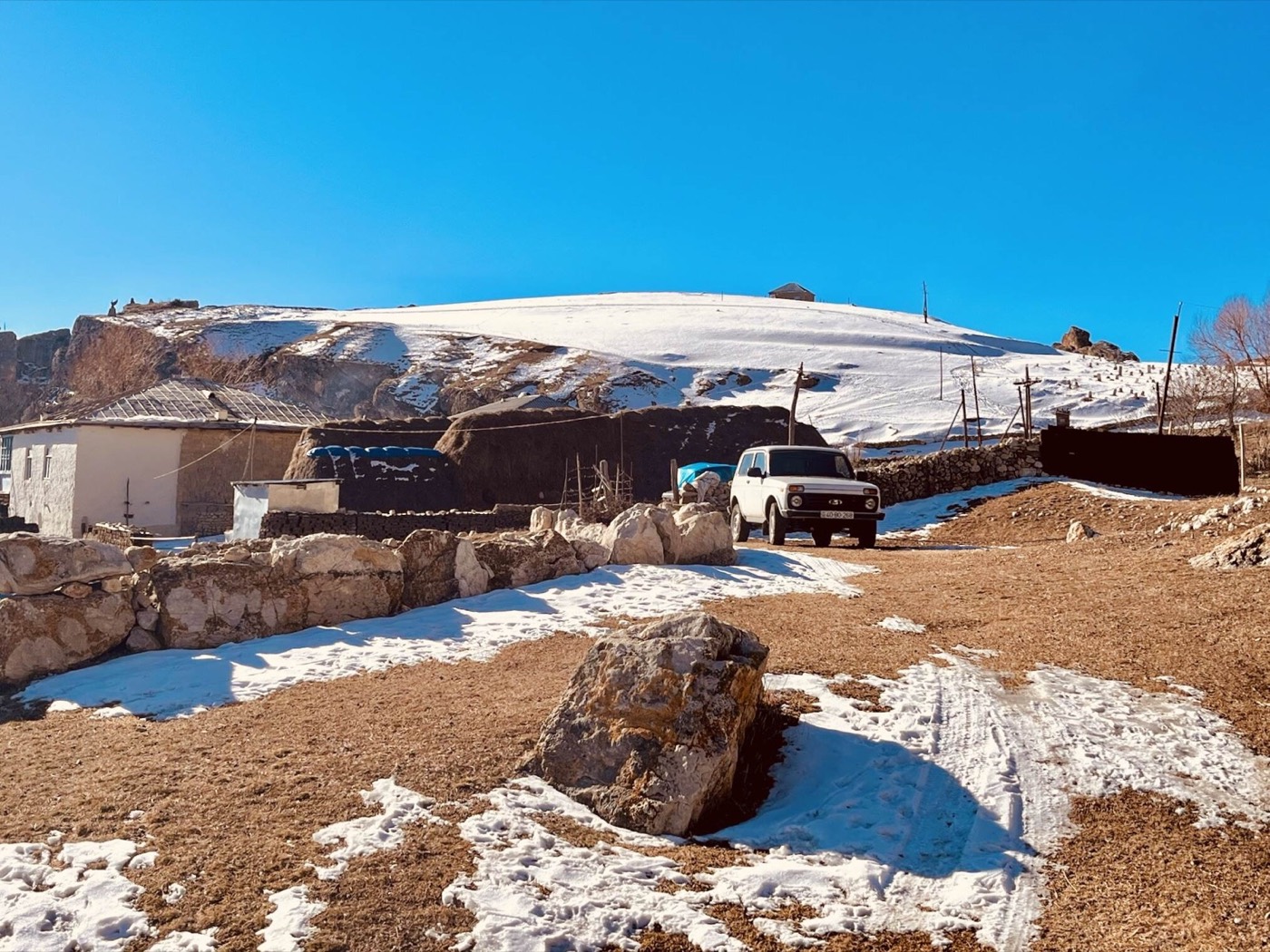
On most of Azerbaijan's mountain routes there is either no mobile coverage at all, or a bar or two at one point on a ridge. This should be treated not as a problem but as a condition you plan for.
Before you leave
- Download offline maps. Organic Maps, Maps.me or Google Maps' offline area. Downloading happens at home over Wi-Fi — in the field it is already too late.
- Put the GPX file on your phone. With the route track loaded, you can see your position without any signal: GPS satellites do not depend on mobile networks and work even in airplane mode.
- Charge to 100% and bring a power bank. Cold drains a battery twice as fast — keep the phone in an inside pocket, close to your body.
- Tell someone at home the plan: where you are going, how many of you there are, when you will be back, and after which hour they should worry. It is a one-sentence message and the single most valuable piece of information in a search and rescue.
- Have the district rescue service and the emergency number written on paper.
In the field
- Put the phone in airplane mode. A phone hunting for signal is the fastest way to empty a battery. GPS navigation works in airplane mode.
- If you need signal, climb to a ridge or an open slope. Valley floors and canyons are the worst places.
- If calls will not connect, try SMS. SMS gets through on far weaker signal than a call, and can wait for a moment of coverage and send itself.
- An important property of emergency calls: the emergency number works through any operator's network. Even if your own operator has no coverage, an emergency call goes through another company's tower.
Satellite options
This area has become much cheaper in recent years:
- Phones with satellite messaging. Newer iPhones and some Android models can send an emergency message from a dead zone. Support is not uniform across Azerbaijan — check before the trip.
- Personal locator beacons (PLB) and devices like the Garmin inReach. The most reliable solution for multi-day and solo routes. They can also be rented.
Staying in touch within the group
In a dead zone, what actually works inside a group is not technology but an agreement:
- The split point and meeting time are set in advance.
- The group never leaves one person behind; the pace of the group is the pace of its slowest member.
- On very long routes small PMR radios (with the channel agreed beforehand) work within a few kilometres.
The simple conclusion
Lack of coverage is not the danger. The danger is setting out relying on coverage. For someone who knows the route, carries the track and has told somebody when they will be back, no signal is just an ordinary condition.
If you are going to a remote or unmarked route for the first time, a guided group is the simplest answer — for example Qalaxudat–Qrız or the Eh trail, Qrız.
Ready to experience it yourself? See the upcoming departures.
Browse tours

