
What happens in your body and brain while you hike
Hiking looks simple — you just walk. But for the body it is a controlled load lasting several hours. Knowing what is happening helps you set both your pace and your food strategy correctly.
The first 10 minutes: the uncomfortable phase
Your heart rate jumps, you are short of breath, your legs feel heavy. This is not a lack of fitness — your body has not switched energy systems yet. Blood is being redirected to the muscles and blood vessels are dilating. This phase lasts 10–15 minutes.
Practical consequence: walk the first 15 minutes deliberately slowly. A group that starts fast is forced to stop by the end of the first hour.
30–60 minutes: steady state
The heart settles, breathing finds a rhythm, the body switches to burning a mix of fat and carbohydrate. Thermoregulation kicks in — you start to sweat, and with it water and salt loss begins. You lose roughly half a litre an hour; in heat and on steep ground it can reach a litre.
Practical consequence: do not wait until you feel thirsty. Thirst arrives only after 1–2% dehydration, and by then performance has already dropped.
2–3 hours: the end of glycogen
The carbohydrate store in your muscles (glycogen) lasts 2–3 hours of moderate effort. When it runs out the familiar state begins: your legs "empty out", your mood drops, your attention scatters. Athletes call it hitting the wall.
Practical consequence: starting from the first hour, eat something small every 45–60 minutes — dried fruit, nuts, dates. Small and regular works better than one large meal.
What happens in the brain
After 20–30 minutes of movement several things change in the brain:
- Cortisol (the stress hormone) falls.
- Endorphins and endocannabinoids rise — this is the calm, "light" state after a hike.
- A protein called BDNF increases; it strengthens connections between neurons and is linked to memory.
This is why an unsolved problem often becomes clear halfway through a hike. It is not mysticism — moving attention off a screen and into a wide, repetitive environment switches on the brain's background mode.
Why the descent hurts more
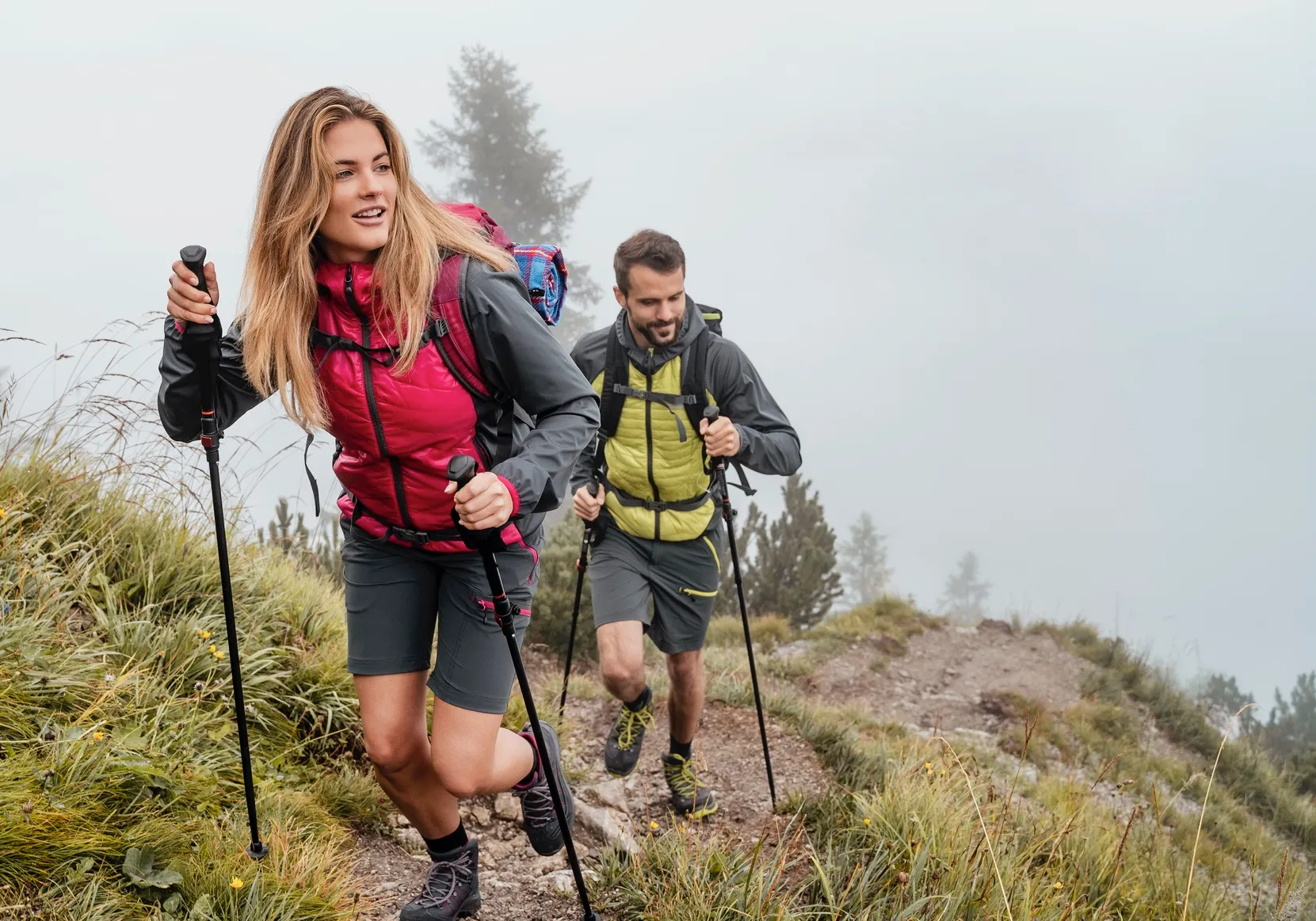
Climbing, muscles work by shortening; descending, they work by lengthening — which causes far more micro-damage to the fibres. That is why the part that aches the next day is usually the thigh, not the calf. This is exactly where trekking poles earn their place: they cut the load on the knee joint by roughly a quarter.
The following 24 hours
The body switches to repair: damaged fibres are rebuilt, glycogen stores refilled. Two things are needed for that — protein (within a few hours of finishing) and sleep. A recovery day is not an empty day; it is part of the training.
For a gentle start, forest routes are the ideal format — for example the Mücü–Lahıc mountain hike or İsmayıllı, the Qalacıq hike.
Ready to experience it yourself? See the upcoming departures.
Browse tours