
Getting fit for a summit: an eight-week plan without a gym

Most people who struggle in the mountains are not "unfit" — they have simply trained for the wrong thing. Endurance for running and endurance for climbing are not the same.
What we are preparing for
A typical one-day summit route: 10–15 km of distance, 800–1200 metres of ascent, 6–8 hours of movement, a 5–8 kg pack on your back. What we need, then, is the ability to work at a moderate load for a long time.
The eight-week plan (3 days a week)
Weeks 1–2 — base
- 2 × 45 minutes of brisk walking (flat)
- 1 × stairs: 15 minutes of continuous climbing
Weeks 3–4 — adding gradient
- 1 × 60-minute walk
- 1 × stairs: 25 minutes
- 1 × 45-minute walk with a 5–6 kg pack
Weeks 5–6 — increasing load
- 1 × 75–90-minute walk with a pack
- 1 × stairs: 30 minutes
- 1 × leg strength: 3 sets × 15 squats, 3 sets × 10 lunges, 3 sets × 20 calf raises
Week 7 — the test
- A real one-day trek: Aghsu, Dilman waterfall or Khizi, Beybeyim mountain
Week 8 — recovery
- Halve the load. Arriving at a summit already tired is the most common mistake.
Not the legs — the knees
On the way down, your knees take twice the load they do going up. So train the descent as well — walking down stairs, slowly and under control.
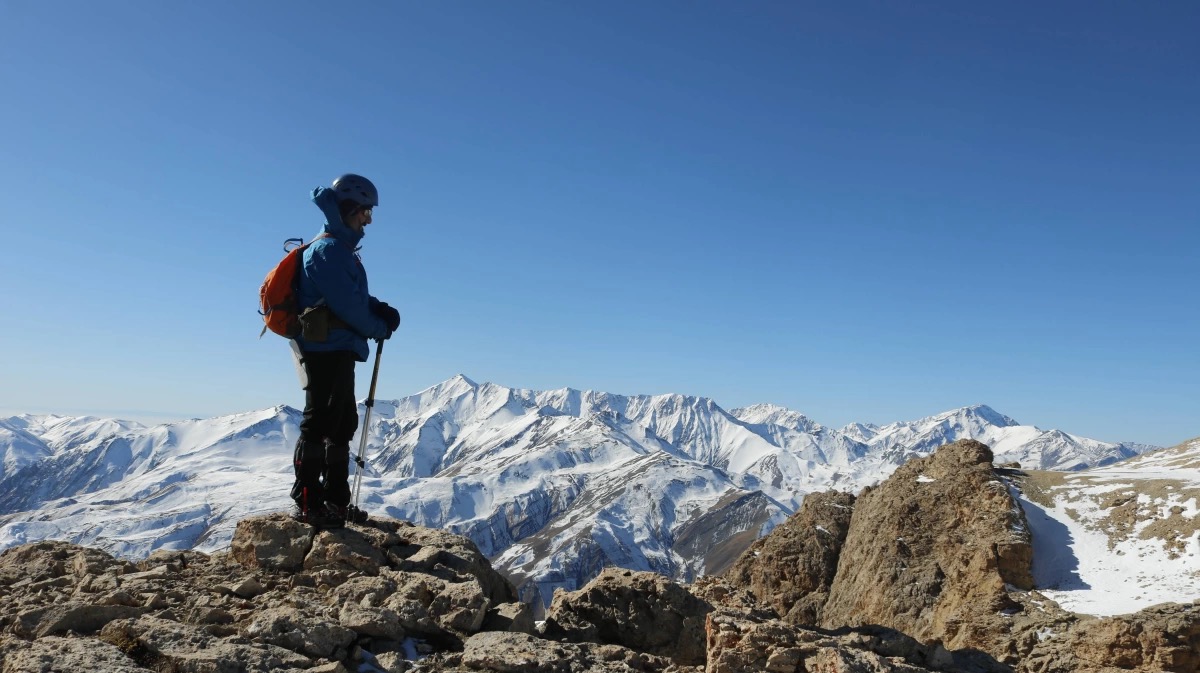
Trekking poles significantly reduce the load on the knees. For someone preparing for a first summit they are the first piece of gear I recommend — after boots.
One rule: if you can talk while climbing, your pace is right. If you cannot, slow down.
Once you are ready, to choose a route: what difficulty grades mean.
Ready to experience it yourself? See the upcoming departures.
Browse tours