
Qırmızı Qəsəbə and the Mountain Jews: Quba's lesser-known history
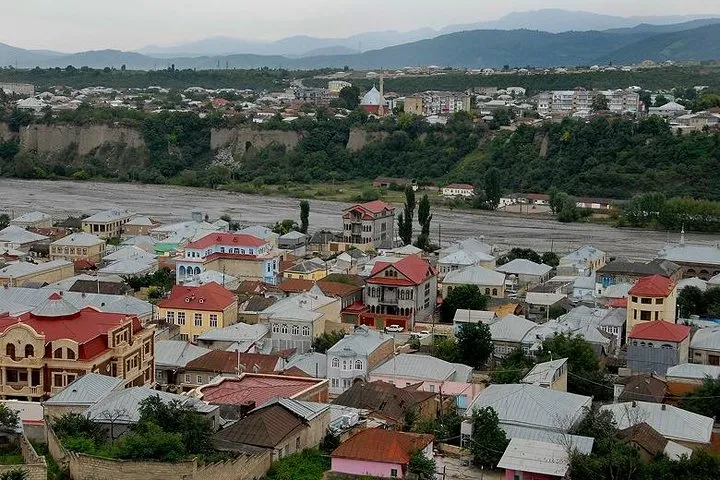
Qırmızı Qəsəbə (the "Red Settlement"), on the far bank of the Qudyalçay river from the town of Quba, is one of the very few settlements in the world inhabited entirely by a Jewish community.
Who the Mountain Jews are
They are a community that has lived for centuries in the Eastern Caucasus — in present-day Azerbaijan and Dagestan. Traditionally they speak Juhuri, a language of Iranian origin belonging to a branch of Persian and carrying Hebrew influence. It is a cultural line distinct from the Ashkenazi and Sephardi communities.
During the Quba Khanate period the community was allocated its own settlement on the other side of the river, and the town grew from there. For a long time it was known as the "Jewish Sloboda".
What is there today
- Synagogues. There are several in the settlement; historically there were many more. Restoration work has been carried out in recent years and community life continues.
- Architecture. The streets are lined with 19th and 20th century buildings: tall stone houses, carved balconies, a dense layout.
- Museum. A museum devoted to the history of the Mountain Jews explains the community's life, its language and its path in Azerbaijan.
- Cemetery. Its older section is a source for the region's history in its own right.
The population has fallen considerably over recent decades — most emigrated to Israel and Russia. On holidays, however, the settlement fills up: families who left return.
Quba's other layers
The region is one of the most ethnically varied parts of Azerbaijan. Within a few hours' radius:
- Xınalıq — the Ketsh language (separate article).
- Qrız, Cek, Haput, Alik — each with its own language or dialect.
- Buduq — a separate language and separate traditions.
- Lezgin villages towards Qusar.
This is a density rarely seen in such a small geography, and it makes seeing the region as only "mountains and waterfalls" an incomplete view.
Fitting it into a trip
Qırmızı Qəsəbə is explored on foot after crossing the bridge from central Quba; one or two hours is enough. So the most logical arrangement is to give the town the first or last half-day of a hiking trip to the region.
Practical notes:
- When entering a synagogue, mind the dress and behaviour rules; ask before photographing.
- Community life follows a different rhythm on Saturdays.
- A local guide makes a real difference here — the stories of the buildings are not written on plaques.
Hiking routes in the region: Qalaxudat–Qrız, the Eh trail, Qrız, Məstdərgah peak and the Qrız waterfall.
Ready to experience it yourself? See the upcoming departures.
Browse tours